Qualified Investor Visa in Panama: Requirements, Process and Risks to Consider
How Panama’s Qualified Investor Visa works: investments from $300,000, property and source-of-funds requirements, timelines and key risks.
 Liliya SobolevaFirst published: July 27, 2026Updated October 17, 20266 min read
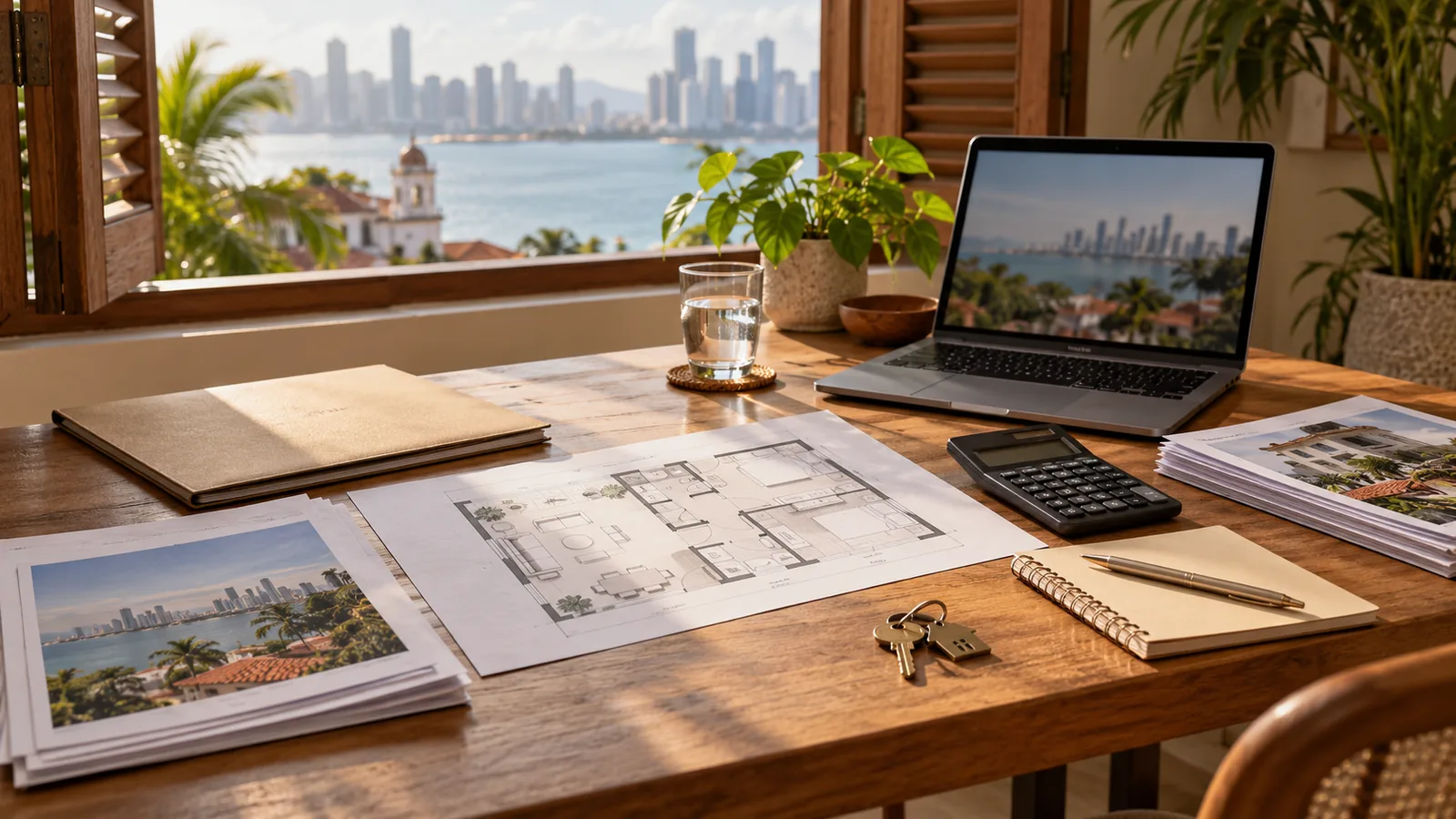
The investment and the immigration application: two sides of due diligence
The table helps frame questions raised by the article. It does not confirm that any investment meets current requirements.
| Topic | Question to check |
|---|---|
| Investment type | Does the chosen form of investment qualify for the program? |
| Property | Do the property, title arrangements and payments meet the conditions of the chosen route? |
| Source of funds | Which documents establish where the money came from? |
| Maintaining the investment | What obligations apply after status is granted? |
| Family | Which documents are needed for the family members included? |
| Timing | Which stages depend on preparing documents and reviewing the case? |
Liliya
The Qualified Investor Visa is often called one of the most straightforward ways to obtain permanent residency in Panama through investment. This is indeed one of the program’s strengths: applicants do not have to obtain temporary status first and wait several years before moving to permanent residency. But a straightforward overall structure does not mean that choosing a property of the required value and transferring the money is enough.
For an investor, three things matter: choosing the right form of investment, confirming the source of funds, and holding the investment for the required period. A mistake at any of these stages can lead to problems after the purchase.
Which investments qualify for the program
The program offers three main options. The most popular is real estate, with a minimum investment of $300,000. The alternatives are an investment of at least $500,000 through Panama’s licensed securities market or a fixed-term deposit of at least $750,000 with a bank licensed to operate in Panama.
For most private clients, real estate is the easiest option to understand. They acquire an asset they can use or rent out while meeting the program’s investment requirement.
It is important, however, to distinguish between two objectives. An apartment may meet the program’s requirements yet still be a weak investment. That is why choosing a property solely because “it costs more than $300,000” is a bad strategy.
The neighborhood, the condition of the building, the layout, rental demand, management quality, and prospects for resale remain just as important as the immigration goal.
The property must meet the program’s requirements
For a registered property, the law requires compliance with the conditions set out for the investment. When purchasing a property above the minimum threshold, the portion of the price above the required amount may, in certain cases, be financed through a local bank.
Properties under construction are subject to separate rules. Following the 2024 changes, mechanisms allow the use of a promise of sale and purchase agreement, but the payment arrangements and safeguards for the transaction must meet the prescribed requirements. In particular, the law provides for a trust structure or full payment to the developer backed by a bank guarantee that meets the specified conditions.
That is exactly why you cannot assume that any new property costing $300,000 automatically qualifies under the Qualified Investor Visa.
Before paying a substantial amount, it is necessary to check not only the project but also the payment arrangements.
The source of funds matters as much as the amount
One common mistake is to buy property first and only then discuss the residency application with a lawyer.
For the program, it is important to show where the investment funds came from and how they reached Panama. The official requirements call for documents showing the source of the funds and how they were transferred.
In practice, this means the banking history of the transaction must be clear.
If the money was held in one account for a long time and then transferred to the seller through a clear sequence of transactions, it is usually easier to document its movement. It becomes harder when funds were drawn from several accounts, passed through third parties or arrived immediately before the purchase from the sale of another asset.
This does not mean that such situations automatically exclude participation in the program. But it is better to prepare the documents before transferring the money, rather than reconstruct the financial history several months later.
Can you include your family?
The program allows you to include eligible dependent family members in the application, including a spouse, children, and parents. The documents required depend on the family relationship and the applicant’s circumstances.
For a family, this is an important advantage: there is no need to make a separate investment for each person.
The eligibility of the family members still needs to be checked in advance, especially for adult children or other dependent relatives. Documents establishing the relationship and dependency are best prepared alongside the investment paperwork.
How long the process takes
MICI gives an indicative timeframe of around 30 business days to review an application under the Qualified Investor program. You can begin the application process through a Panamanian lawyer while abroad.
This timeframe should not be treated as a promise of a result in exactly one month.
The pace of the process depends largely on the quality of the document preparation, the evidence of the investment and the information gathered about the applicant and their family.
Often, the application reviewed most quickly is not the one for which money was transferred first, but the one whose transaction structure was carefully planned in advance.
Main risks to keep in mind
The main risk with the Qualified Investor Visa is viewing the program exclusively as an immigration product.
A buyer sees the $300,000 threshold, finds a property at the required price, and tries to close the deal as quickly as possible. But five years of ownership is a long enough period for the shortcomings of the building, the neighborhood, or the project itself to emerge.
Another risk is related to documentation. Even a good property cannot resolve the problem if the source-of-funds documentation and payment arrangements have not been prepared properly.
Finally, when buying a new property, the risk of the project not being completed needs a separate assessment. Current regulations provide safeguards and allow the investment to be replaced in certain circumstances, but it is far more sensible to check the transaction structure before a problem arises.
Who is the Qualified Investor program really for?
The program makes particular sense for someone who was already planning to invest in Panama, even without an immigration objective, and is prepared to hold the asset for several years.
For example, a family wants to buy an apartment to live in. Or an investor is considering real estate for long-term rental and is not planning a quick resale. In such situations, the investment and obtaining permanent residency complement each other.
A completely different situation arises when a person buys the first apartment they come across only because it meets the program’s minimum threshold. Here, the residency issue is addressed first, and the consequences of the investment itself are left for later.
We believe that approach puts things in the wrong order.
At Mundo Expert and Mundo Real Estate Group, before starting the process we look at two sides of the deal at the same time: whether the structure meets the program’s requirements and whether the investment itself makes sense for the client. We check the source of funds, the payment option, the property, the developer or seller, and the client’s future plans for owning the property.
The Qualified Investor Visa can be a convenient way to obtain permanent residency in Panama. But it becomes a good decision only when the investment would be sensible even without the immigration component.
With best wishes, Liliya Soboleva!
Be Happy Now!